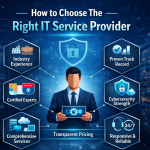
Selecting an IT support provider is one of the most important decisions a business can make. The right partner strengthens your security, reduces downtime, and supports long-term growth. The wrong one creates risk and operational headaches. Here are some things you should consider when selecting an MSP.
Step 1: Identify Your Business Needs
Start by identifying your current pain points, uncovering potential security vulnerabilities, and evaluating any industry compliance requirements you need to meet. You should also consider scalability to accommodate growth plans to ensure your technology can scale alongside your business, while keeping budget constraints in mind.
Step 2: Evaluate The Expertise Of The MSP
When choosing a managed service provider, there some key factors you should look for. These attributes can help distinguish one IT support provider from the next.
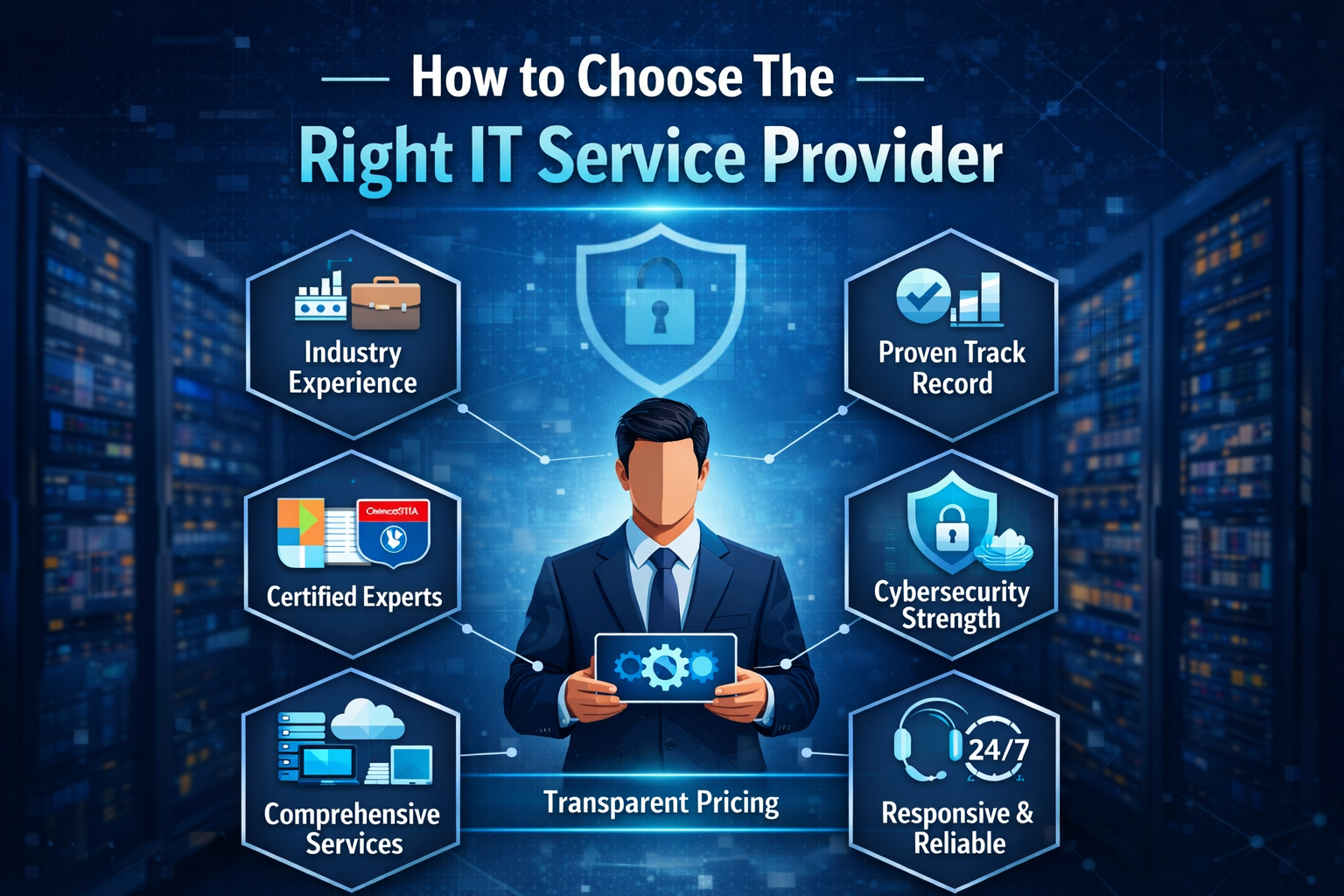
Experience In Your Industry
Experience in a business’s industry is crucial when selecting a Managed Service Provider (MSP). An MSP familiar with your industry understands the unique challenges, regulatory requirements, and operational workflows that are specific to your sector. This means they can anticipate potential issues, implement best practices, and provide solutions tailored to your business rather than offering generic IT support.
Industry experience also helps the MSP align technology strategies with your business goals, minimize downtime, and ensure compliance with standards that may be mandatory in your field. In short, choosing an MSP with industry-specific experience leads to smarter, faster, and more reliable IT management that supports growth and mitigates risks.
Proven Track Record
A proven track record is one of the most important factors to consider when choosing a Managed Service Provider (MSP). It demonstrates that the provider has successfully delivered reliable IT services to other clients over time, showing consistency, expertise, and the ability to solve real-world problems. A strong track record also gives confidence that the MSP can handle complex technical challenges, meet deadlines, and maintain high standards of service even under pressure. Essentially, a provider with a history of successful outcomes reduces risk for your business and signals that they can be trusted to protect your systems, data, and operations.
Certifications (Microsoft, Cisco, CompTIA, etc.)
Certifications from industry leaders like Microsoft, Cisco, and CompTIA are a strong indicator of an MSP’s technical expertise and commitment to best practices. These credentials demonstrate that the team has undergone rigorous training, keeps up with evolving technologies, and meets established standards for IT management and security. Certifications also show that the MSP can competently handle specialized systems, troubleshoot complex issues, and implement solutions that align with industry guidelines. Choosing a certified provider gives businesses confidence that their IT infrastructure is managed by professionals who are knowledgeable, up-to-date, and capable of delivering reliable, secure, and compliant services.
Strong Cybersecurity Capabilities
Strong cybersecurity capabilities are critical when selecting a Managed Service Provider (MSP), especially for industries like legal, healthcare, and government contracting, where sensitive data and regulatory compliance are paramount. An MSP with robust cybersecurity expertise can protect your organization from cyber threats such as ransomware, phishing, and data breaches, which could otherwise result in costly downtime, reputational damage, or legal penalties. For legal firms, client confidentiality is essential; healthcare organizations must comply with HIPAA regulations; and government contractors face strict requirements like CMMC. A provider with strong security capabilities ensures your networks, systems, and data remain protected, while also helping you maintain compliance and business continuity in high-risk environments.
Step 3: Comprehensive IT Services
A strong managed IT service provider should offer a wide range of IT solutions. Choosing an MSP that offers a comprehensive range of services is essential because it allows your business to have all its IT needs managed under one roof. From network monitoring and cybersecurity to cloud management, data backup, and compliance support, a full-service MSP like Critical IT Solutions can provide integrated solutions that work seamlessly together. This reduces complexity, minimizes gaps in coverage, and ensures that every aspect of your IT environment is aligned with your business goals. A broad service offering also makes it easier to scale as your organization grows, giving you a single trusted partner who can adapt to evolving technology needs and deliver consistent, reliable support across the board.
Step 4: Responsiveness & Reliability
Responsiveness and reliability are two of the most critical qualities to look for in a Managed Service Provider (MSP). Technology issues can arise unexpectedly and have an immediate impact on your business operations, so you need a provider who responds quickly and effectively to resolve problems. An MSP that is reliable ensures that systems stay up and running, backups function correctly, and security measures are consistently enforced. For businesses in fast-paced or regulated industries, delays or downtime can be costly both financially and reputationally. Choosing a trusted and experienced MSP like Critical IT Solutions, gives you peace of mind that your IT environment is always supported, monitored, and protected without interruption. 24/7 monitoring and compliance regulations are mandatory services that any MSP you choose should provide.
Step 5: Assess Security Practices
Your provider should follow a comprehensive approach to security that includes zero-trust principles, strict enforcement of multi-factor authentication (MFA), regular system patching, continuous security monitoring, and ongoing employee training. By implementing these measures, they help safeguard your network, data, and applications from cyber threats while ensuring that your organization stays compliant and resilient against evolving risks.
Step 6: Compare Pricing Models
Look for predictable, transparent pricing—not hidden fees or hourly surprises. Flat rate fee structure like those provided by Critical IT Solutions help businesses budget effectively and avoid unexpected costs. Clear pricing structures show exactly what services are included, eliminating hidden fees and surprises that can strain your finances.
Choosing the right IT provider is about more than technology—it’s about partnership. Select a provider who understands your goals and can support your business for years to come.
Need help evaluating your IT environment?
Contact Critical IT Solutions to discuss managed IT, cybersecurity, backup, and cloud options tailored to your business.